
Facebook isn’t just another social media platform. It’s a place where a huge part of the world spends a noticeable chunk of their day. With over 1.56 billion daily active users, roughly 7% of our waking time is spent on this one platform. Very few marketing channels can claim that kind of proximity to the consumer. This is where recommendations spread, brands get noticed, and buying decisions are born.
Note: This article is Part 2 of our comprehensive series on the platform. In our first installment, we covered the foundational definitions, account setup, and the core components of a successful presence. If you haven’t read that yet, be sure to check out What is Facebook Marketing: The Complete Guide (Part 1) to get fully up to speed before diving into the advanced strategies below.
Running a Facebook Page isn’t just about posting content—it’s about how you show up, communicate, and build relationships over time. In a landscape of shifting algorithms, understanding the nuance of reach vs impression vs engagement is the difference between a vanity project and a revenue generator.
Best Practices for Posting Frequency
There’s no magic number, but consistency matters more than volume.
A realistic posting schedule:
- 3–5 posts per week for most businesses
- Quality over quantity
- Avoid posting just to “stay active”
If posting daily feels forced or rushed, scale back. Burnout shows in content.
How to Write Captions That Drive Engagement
Good captions don’t just describe the post—they invite interaction.
Effective Facebook captions often:
- Ask a question
- Share a short story
- Address a pain point
- Use natural, conversational language
- Include a clear (but soft) call to action
Instead of: “Check out our new service”
Try: “Have you ever struggled with [problems]? This is exactly why we created this.”
Using Visuals and Video Strategically
Facebook is a visual-first environment. According to Adobe’s latest video trends report, videos with captions see a 40% increase in view time because the vast majority of mobile users watch without sound.
Some best practices:
- Use real photos over stock images
- Keep videos short and mobile-friendly
- Add captions to videos (most people watch without sound)
- Focus on the first 3 seconds
You don’t need studio-quality production. You need clarity, authenticity, and relevance.
Responding to Comments and Messages
This is where many brands drop the ball.
Responding quickly:
- Improves trust
- Boosts reach
- Signals that your brand is active and approachable
Even a simple “Thanks for sharing!” or “Great question—here’s the answer” goes a long way.
Facebook rewards Pages that act… well, social.
Building Long-Term Relationships (Not Chasing Quick Wins)
The biggest mistake businesses make on Facebook is treating it like a billboard.
Instead of asking:
“How do I sell more today?”
Ask:
“How do I stay relevant for the next year?”
Long-term success comes from:
- Showing up consistently
- Providing value without always selling
- Listening to feedback
- Being human
Sales follow trust. Trust follows consistency.
Facebook Marketplace
If your business sells products or services locally, Facebook Marketplace is a channel you shouldn’t overlook. While many debated the Facebook Page vs Website for small business value in the past, Marketplace has proven that you can drive sales directly on-platform without needing a complex checkout system.
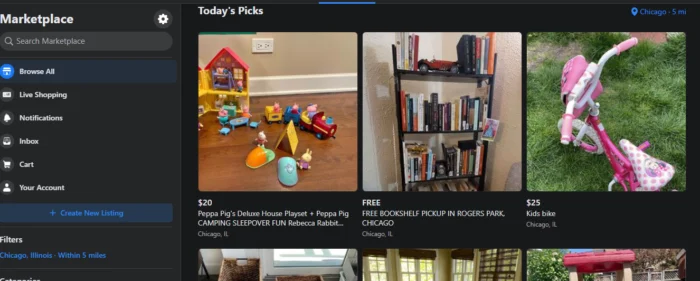
Facebook Marketplace sees over 1.2 billion monthly users, and a notable portion of Facebook users log in specifically to browse Marketplace listings. That means you’re not interrupting someone’s feed with a sales message—you’re meeting them where they’re already looking to buy.
How Facebook Marketplace Works for Businesses
Businesses can use Marketplace in two main ways:
- Free organic listings
- Paid Marketplace ads
Organic listings allow you to post products or services directly to the Marketplace at no cost. These listings appear alongside other local offerings and are discoverable by people searching or browsing nearby.
For businesses ready to scale, Marketplace ads take things a step further. These ads appear natively among organic listings and are marked with a small “Sponsored” label. Because they blend seamlessly into the browsing experience, they often feel less intrusive than traditional feed ads.
Why Marketplace Ads Are So Effective?
Marketplace ads work because of intent. People scrolling the Marketplace are already comparing prices, looking for solutions, or planning a purchase.
That’s why Marketplace ads tend to convert well—more than half of users who click on a Marketplace ad end up making a purchase. Few ad placements offer that level of buyer readiness.
Marketplace ads are especially effective for:
- Local retailers
- Service providers (home services, fitness, repair, rentals)
- Restaurants and bakeries
- Event-based businesses
- Secondhand or resale brands
Using Marketplace Ads in Larger Campaigns
You don’t have to run Marketplace ads as a standalone effort. Meta allows you to include Marketplace placements within broader campaigns using automatic placements or Advantage+ campaigns.
This lets Facebook’s algorithm decide when your ad should appear:
- In the feed
- In Stories or Reels
- Or inside Marketplace
For beginners, this approach often performs better than manual placement selection because it allows the system to optimize based on real-time results.
Facebook Groups: Building a “Dark Social” Community
Groups are the “living room” of Facebook. While Pages are great for broadcasting, Groups are built for conversation. According toHubSpot’s 2025 State of Marketing, “community-led growth” is one of thesocial media trends to watch out for this year.
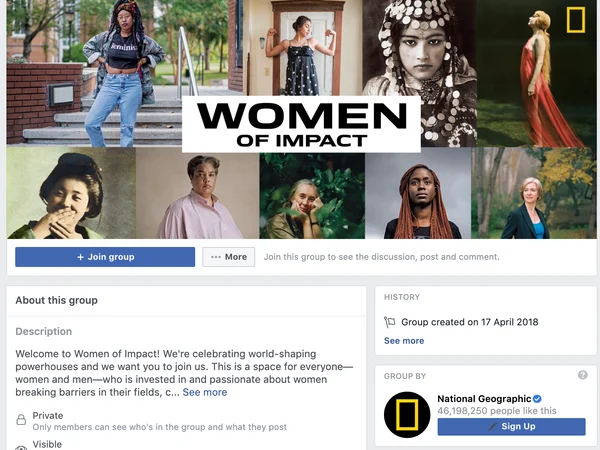
More than 1.8 billion people use Facebook Groups every month, and many of them actively seek out Groups to learn, ask questions, and engage with people who share similar interests.
Why Facebook Groups Are Valuable for Businesses?
For businesses, Groups create an entirely different kind of relationship with your audience.
Unlike a Page—where your posts compete with ads, friends’ updates, and algorithm shifts—a Group gives you direct access to people who chose to be there.
A well-run Facebook Group can:
- Build stronger brand loyalty
- Encourage repeat customers
- Generate honest feedback
- Spark content and product ideas
- Humanize your brand voice
Private Groups, in particular, feel more personal. They give your most engaged followers a space where they’re more likely to see your posts—and actually interact with them.
How Businesses Use Facebook Groups?
Businesses use Groups in different ways depending on their goals:
- Customer support or onboarding communities
- Educational Groups tied to a product or service
- VIP or loyalty Groups with exclusive access
- Industry or niche discussion hubs
The key is to lead with value, not promotion. Groups that feel like constant sales pitches rarely survive long-term.
Best Practices for Managing a Facebook Group
Running a Group requires commitment. Unlike a Page, Groups need consistent moderation and engagement to stay healthy.
Some best practices include:
- Setting clear Group rules from day one
- Asking entry questions to screen new members
- Encouraging introductions and discussion
- Actively removing spam or self-promotion
- Posting consistently to keep conversations going
A smaller, engaged Group is far more valuable than a large, silent one.
Is a Facebook Group Right for Your Business?
Before starting a Group, ask yourself:
- Do I have the time to manage it?
- Can I provide ongoing value?
- Does my audience want a deeper connection?
If the answer is yes, a Facebook Group can become one of your most powerful long-term marketing assets. If not, it’s better to focus your energy on Pages, content, and ads instead of spreading yourself too thin.
Successful Facebook Marketing Examples to Inspire Your Brand
Seeing Facebook marketing theory is one thing. Seeing how real brands actually use the platform is where things start to click. These examples highlight different goals—community building, sales, education, and brand personality—so you can borrow ideas that fit your own strategy.
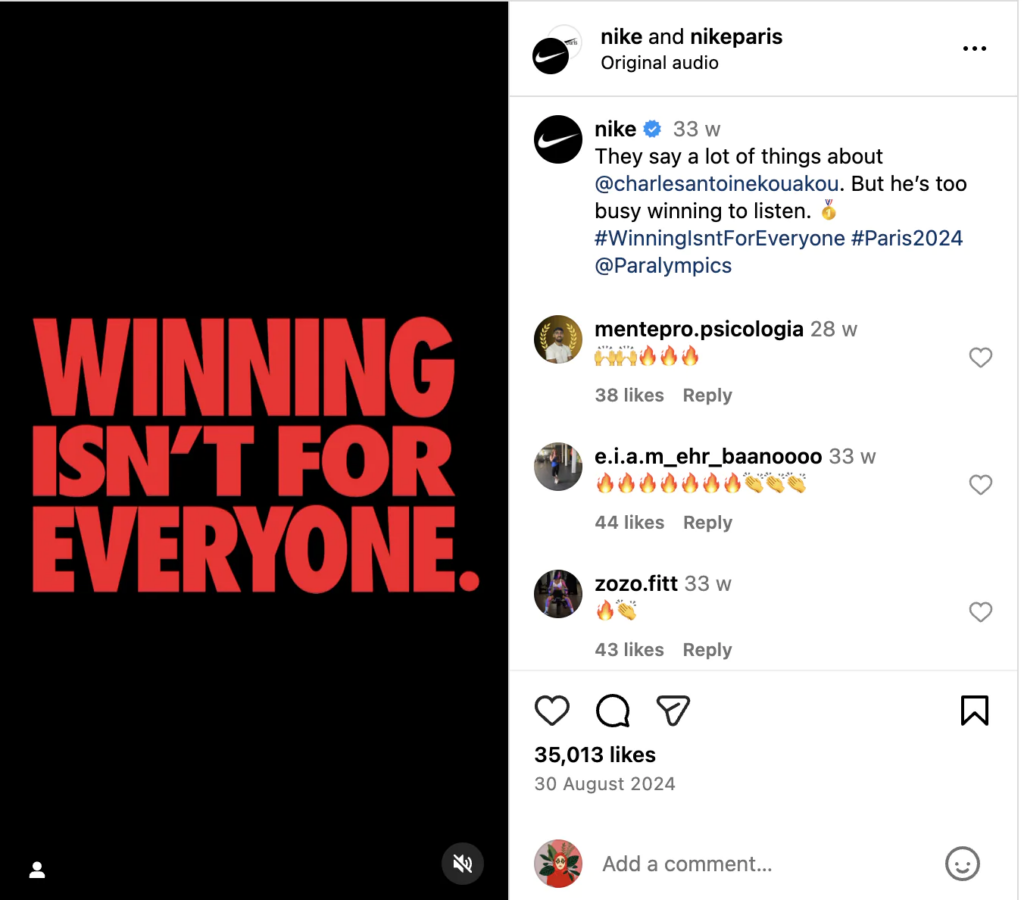
1. Nike: Storytelling Through Video and Community Engagement
Nike doesn’t use Facebook just to sell shoes. They use it to sell belief.
Their Facebook strategy leans heavily into:
- Short-form and long-form video
- Emotional storytelling
- Athlete spotlights
- Community-driven narratives
Instead of saying “buy this product,” Nike posts videos about perseverance, discipline, and personal victories—often featuring everyday athletes alongside professionals. These posts spark massive engagement because people see themselves in the stories.
Why it works
- Video-first content keeps users watching longer
- Emotional storytelling builds brand loyalty
- Posts are shareable, extending reach organically
Takeaway for your brand
You don’t need Nike’s budget to apply this idea. Focus on stories:
- Customer journeys
- Employee spotlights
- Behind-the-scenes challenges
People connect with people, not product specs.
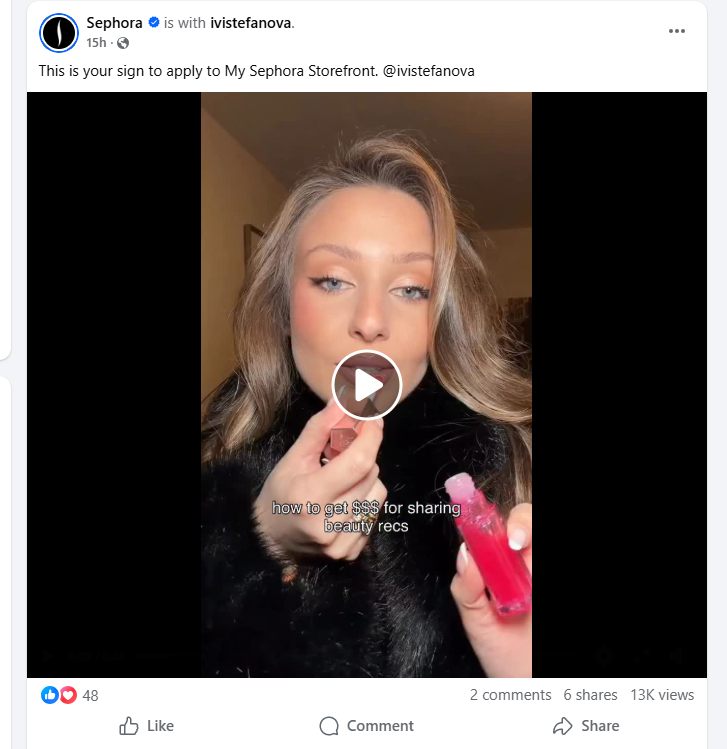
2. Sephora: Using Facebook for Education and Social Proof
Sephora uses Facebook as a beauty classroom.
Their content mix includes:
- Short tutorials
- Product demos
- User-generated content (UGC)
- Customer reviews and testimonials
Many of their posts answer common questions like:
“How do I use this?”
“Which product is right for me?”
“What does this look like in real life?”
They also encourage customers to comment, tag friends, and share their own experiences—turning followers into brand advocates.
Why it works
- Educational content builds trust
- UGC adds authenticity
- Comments create social proof that influences buying decisions
Takeaway for your brand
If your product or service requires explanation, Facebook is a great place to teach:
- FAQs
- How-to videos
- Before-and-after examples
Education lowers hesitation and increases conversions.
3. Airbnb: Community-Driven Content and Lifestyle Marketing
Airbnb rarely posts “Book now” messages on Facebook.
Instead, they focus on:
- Travel inspiration
- Host stories
- Unique stays
- Cultural experiences
Their Facebook feed feels more like a travel magazine than a booking platform. This keeps people engaged even when they’re not actively planning a trip.
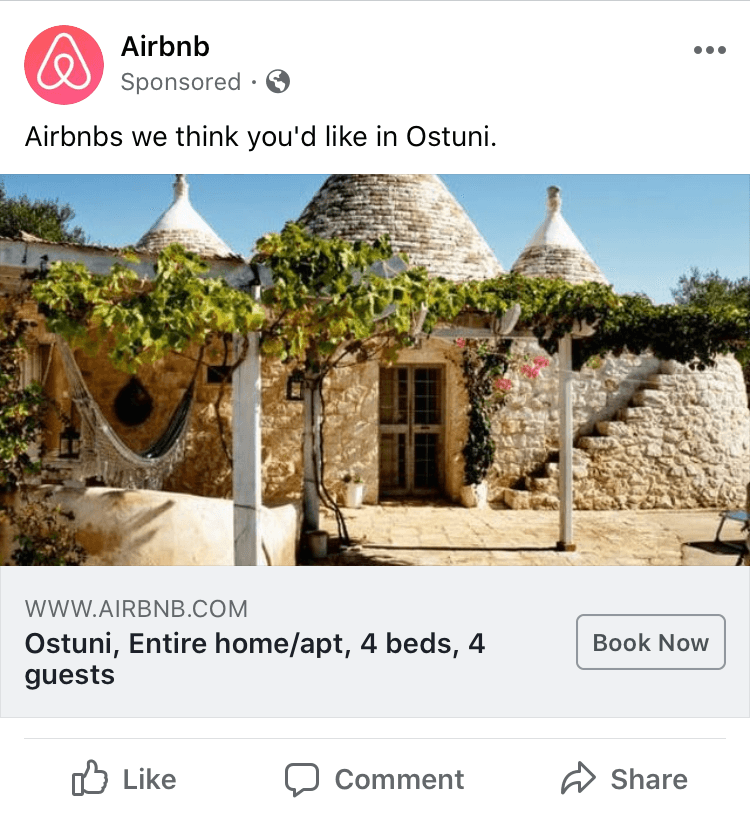
Airbnb also uses comments strategically—asking followers where they’d go next or what kind of stay they prefer, turning posts into conversations.
Why it works
- Lifestyle content keeps the brand top of mind
- Community interaction boosts engagement
- Posts align with how people dream, not how they shop
Takeaway for your brand
Think beyond transactions. Ask:
- What lifestyle does my brand support?
- What aspirations does my audience have?
Create content that fits into those moments.
4. Gymshark: Reels, Influencers, and High Engagement
Gymshark built much of its success on social-first marketing, and Facebook still plays a role—especially with Reels and short videos.
Their strategy includes:
- Fitness creators and influencers
- Workout clips and transformations
- Relatable gym humor
- High-energy Reels optimized for mobile
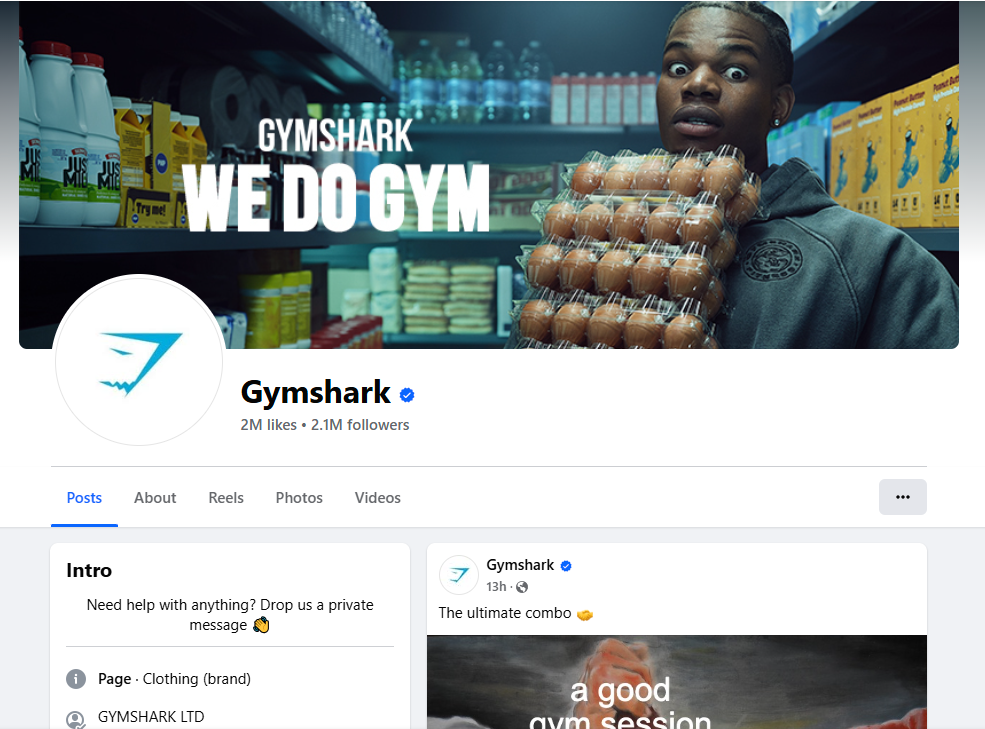
Instead of polished ads, Gymshark often posts content that feels native to the feed—like something a friend might share.
Why it works
- Short-form video matches modern attention spans
- Influencer content feels authentic
- Reels get strong organic reach
Takeaway for your brand
You don’t need influencers with millions of followers. Micro-creators and real customers can deliver better engagement—and often at a lower cost.
Facebook Marketing Tools to Optimize Your Strategy
A solid Facebook marketing strategy isn’t just about what you post—it’s about how you manage, analyze, and optimize everything behind the scenes. Facebook offers powerful native tools, and when combined with third-party platforms, they make it far easier to stay organized, consistent, and data-driven.
Below are four essential Facebook marketing tools that help businesses work smarter, not harder.
1. Meta Business Suite
Meta Business Suite is the central hub for managing your Facebook and Instagram presence. If you’re serious about Facebook marketing, this is the first tool you should get comfortable with.
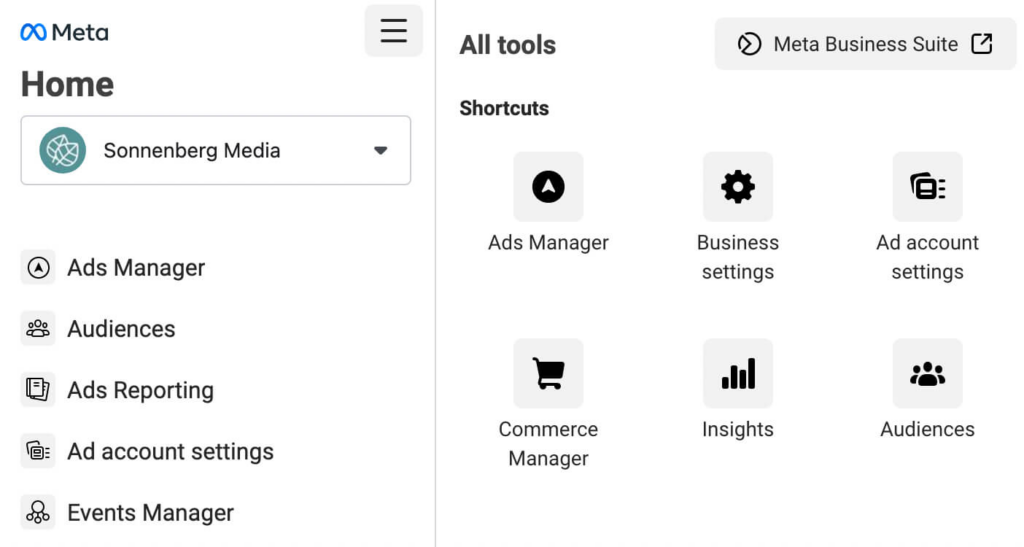
From one dashboard, Meta Business Suite allows you to:
- Manage your Facebook Page and Instagram account together
- Create and publish posts
- Respond to comments and messages
- View basic performance insights
- Access monetization and ad tools
For small teams or solo marketers, Meta Business Suite simplifies daily management by keeping everything in one place. Instead of jumping between apps, you can handle content, conversations, and insights from a single interface.
One of its biggest advantages is messaging. You can reply to Facebook Messenger, Instagram DMs, and comments in one inbox—making it easier to stay responsive, which matters since customers increasingly expect fast replies from brands.
Meta Business Suite also offers scheduling features, allowing you to plan posts ahead of time and maintain consistency without posting manually every day.
Best for:
Small businesses, beginners, and teams managing both Facebook and Instagram organically.
2. Facebook Ads Manager
Facebook Ads Manager is where paid Facebook marketing happens. Even if you’re not running ads yet, understanding this tool is essential if you plan to scale in the future.
Ads Manager allows you to:
- Create and manage ad campaigns
- Choose objectives (awareness, traffic, leads, conversions, sales)
- Define audiences (custom, lookalike, interest-based)
- Set budgets and schedules
- Monitor ad performance in real time
Unlike boosting posts directly from your Page, Ads Manager gives you far more control. You can test different creatives, audiences, placements, and bidding strategies—helping you spend your budget more efficiently.
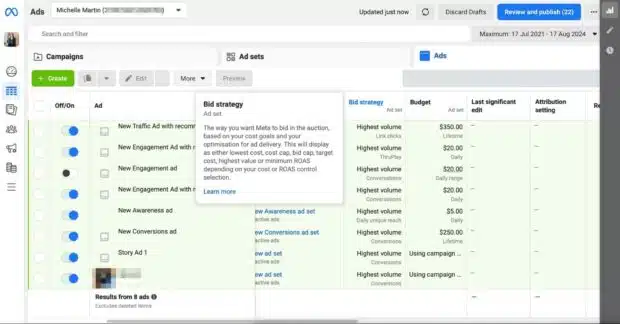
Ads Manager also offers advanced reporting, so you can see exactly what’s working and what isn’t. Metrics like cost per result, click-through rate, reach, and conversions help you optimize campaigns over time instead of guessing.
For businesses using Facebook ads seriously, Ads Manager isn’t optional—it’s foundational.
Best for:
Businesses running paid campaigns, lead generation, ecommerce, or retargeting strategies.
3. Content Scheduling Tools
Consistency is one of the hardest parts of Facebook marketing—and one of the most important. Content scheduling tools help you plan, organize, and publish posts without scrambling every day.
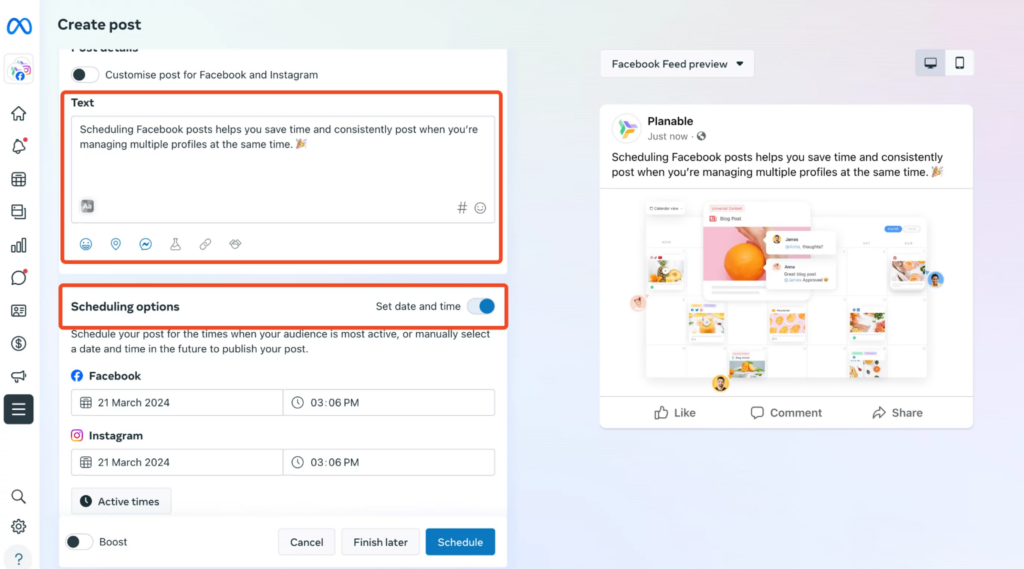
While Meta Business Suite includes basic scheduling, third-party tools offer more advanced features such as:
- Visual content calendars
- Cross-platform scheduling
- Team collaboration and approvals
- Post previews
- Suggested posting times based on engagement data
Scheduling tools allow you to batch your content creation. Instead of posting in real time, you can plan a week or month’s worth of content in advance, freeing up time for engagement, strategy, and analysis.
They’re especially helpful for businesses managing multiple Pages, brands, or platforms, as well as teams that need review and approval workflows.
Best for:
Busy teams, agencies, and businesses posting consistently across multiple platforms.
4. Analytics and Reporting Tools
You can’t optimize what you don’t measure. Analytics and reporting tools help you understand whether your Facebook marketing efforts are actually delivering results.
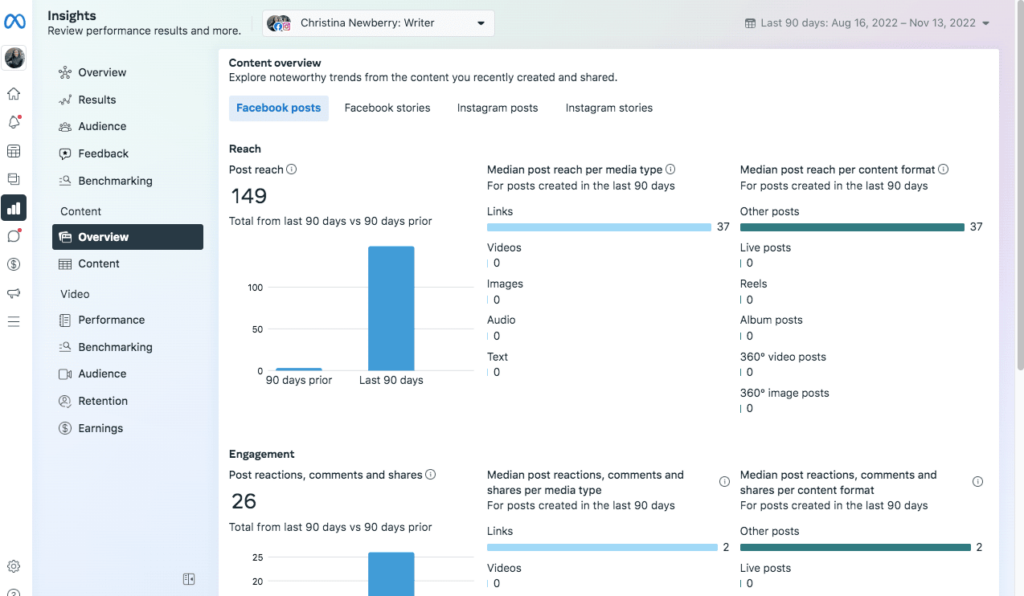
Native Facebook insights show basic data like:
- Reach and impressions
- Engagement (likes, comments, shares)
- Follower growth
- Page activity
However, third-party analytics tools go deeper by:
- Tracking performance over time
- Comparing post types and formats
- Measuring audience growth trends
- Connecting social results to business goals
- Generating downloadable reports
These insights help you identify patterns—such as which content types drive the most engagement, what posting times work best, and which campaigns deliver the highest ROI.
Regular reporting also makes it easier to justify your strategy to stakeholders or clients, especially when you can tie Facebook performance to leads, traffic, or conversions.
Use built-in insights or third-party tools to track ROI. As noted by Sprout Social, data-driven marketers are 3x more likely to hit their quarterly targets.
Best for:
Data-driven marketers, growing businesses, and teams focused on long-term performance improvement.
Choosing the Right Tool Stack
You don’t need every tool on day one. Many businesses start with Meta Business Suite and Ads Manager, then layer in scheduling and analytics tools as their strategy matures.
The goal isn’t more tools—it’s better visibility, consistency, and decision-making. The right tools support your strategy instead of complicating it.
Conclusion: Quality is the Only Metric That Matters
Facebook marketing isn’t about beating the algorithm or posting nonstop—it’s about connecting with the right people at the right time. Whether you’re leveraging Marketplace for local sales or a Group for community loyalty, stay consistent and lead with value.
Are you struggling to decide between a focused Page strategy or a broader ad campaign? We can help you analyze your current metrics to see which path offers the highest ROI for your specific niche.
Facebook Marketing FAQs
Is Facebook marketing still worth it?
Yes. With billions of active users, Facebook remains one of the most effective platforms for brand awareness, community building, and conversions—especially when paired with smart content and targeted ads.
How often should businesses post on Facebook?
Aim for 3–5 posts per week. Consistency matters more than volume. Focus on quality content that encourages interaction rather than posting daily without purpose.
Does Facebook still offer organic reach?
Yes, but it’s limited. Posts that spark conversations—questions, short videos, Reels, and relatable content—tend to perform best organically.
Do small businesses need Facebook ads?
Not immediately. Start with organic content. Ads make sense once you have clear goals, strong posts, and want to scale reach, leads, or sales.
How long does it take to see results?
Organic growth typically takes a few months. Paid ads can deliver faster results, but long-term success comes from consistency and testing.
What metrics should I track?
Track metrics based on your goals:
- Awareness: reach, impressions
- Engagement: likes, comments, shares
- Conversions: clicks, leads, sales
Biggest Facebook marketing mistake?
Treating Facebook like a sales billboard. Engagement, trust, and value-driven content matter more than constant promotion.
Facebook marketing isn’t about beating the algorithm or posting nonstop—it’s about connecting with the right people in a meaningful way. With its massive user base and versatile tools, Facebook still offers businesses a powerful space to build awareness, engage audiences, and support long-term growth when used with intention and consistency.
Whether you’re just getting started or refining your approach, focus on understanding your audience, creating valuable content, and using ads and tools strategically. Start simple, stay consistent, and evolve based on what works—because strong relationships, not quick wins, are what ultimately drive results on Facebook.

